How the Prolifics AI Software Factory and 10x Engineer turn fragmented experimentation into repeatable business outcomes
THE SHIFT: Move from proving what AI can do to building a governed, reusable system that delivers measurable outcomes. |
AI experimentation is everywhere. Engineering teams test copilots. Customer service leaders are piloting intelligent assistants. Operations teams are automating reports, and product teams are adding generative AI features to roadmaps. Yet many organizations still struggle to show durable business value from all this activity.
The issue is rarely a shortage of ideas. It is fragmentation. Individual pilots may save time or impress stakeholders, but they often operate with different tools, data sources, controls, and success measures. When every team builds its own approach, AI remains a collection of demonstrations rather than a capability the enterprise can scale.
The next step is not another pilot. It is an AI operating model: a practical system for selecting, building, governing, deploying, measuring, and continuously improving AI-enabled workflows. Prolifics helps organizations establish that system through the AI Software Factory, strengthened by the 10x Engineer approach to AI-augmented software delivery.
Why AI Activity Does Not Automatically Create Value
A pilot usually proves that a model can perform a task. An operating model proves that the business can repeat the result safely, economically, and at scale. That difference matters. A promising prototype can still stall because it lacks production-quality data, integration with core systems, security controls, accountable ownership, user adoption, or a clear connection to financial outcomes.
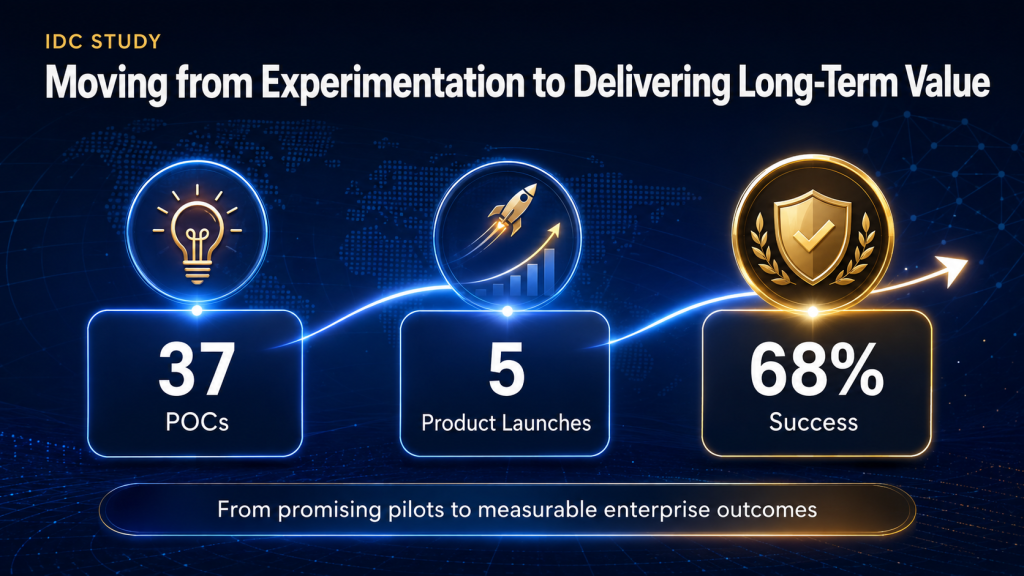
Real value appears when AI changes how work gets done. That can mean shorter release cycles, less rework, faster customer support, lower cost to serve, improved product quality, stronger compliance, or new revenue-generating experiences. These outcomes require more than model performance. They require coordinated people, processes, platforms, data, and governance.
This is why leaders should replace the question “Where can we use AI?” with a sharper one: “Which repeatable AI-enabled workflows can improve a priority business metric, and what operating model will sustain them?”
Start with the Value Stream, Not Technology
The strongest AI portfolios begin with business value streams. Leaders identify where delays, manual effort, defects, or poor decisions create measurable friction, then prioritize opportunities by impact, feasibility, risk, data readiness, and time to value.
Software delivery is often an ideal starting point because its economics are visible. AI can support requirements analysis, architecture reviews, code generation, testing, documentation, release readiness, incident resolution, and feedback analysis. The opportunity is not merely to help developers type faster. It is to improve flow across the entire software development lifecycle.
The same logic applies beyond engineering. In customer service, AI can improve triage, summarization, knowledge retrieval, and resolution. In professional services, it can accelerate configuration, migration, training, and documentation. In enterprise operations, it can streamline finance, HR, procurement, compliance, and reporting. Each use case should be tied to an outcome such as cycle time, quality, margin, customer satisfaction, or revenue enablement.
The Prolifics AI Software Factory: A Repeatable Route to Production
The Prolifics AI Software Factory provides the structure needed to move from an isolated use case to controlled production. It brings discovery, data readiness, engineering, integration, governance, testing, deployment, and observability into a repeatable delivery model.
Instead of rebuilding the foundation for every initiative, teams can reuse reference architectures, approved components, agent patterns, prompts, evaluation methods, security controls, and deployment pipelines. Reuse reduces delivery friction while consistent controls make risks easier to identify and manage.
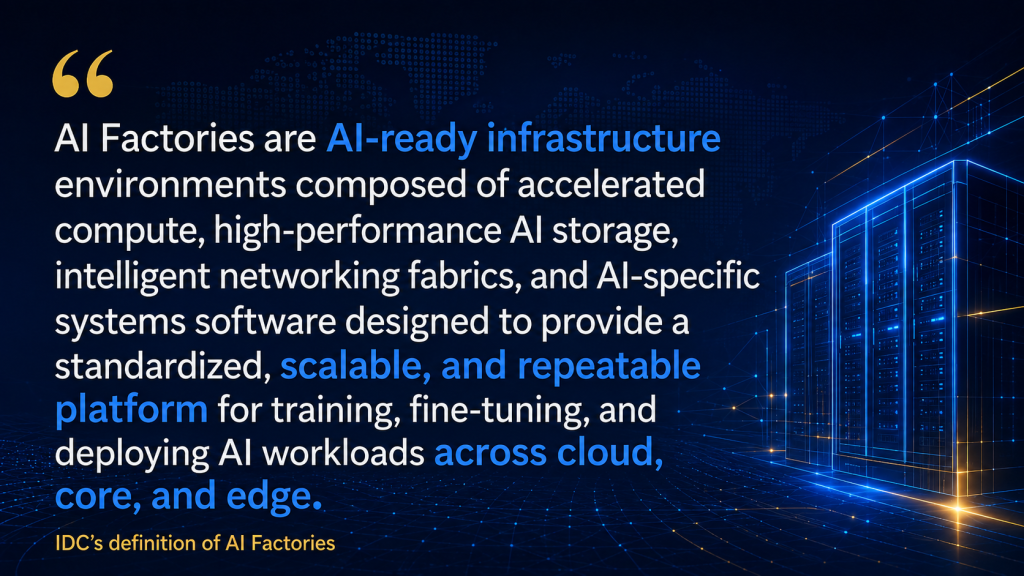
Just as important, the factory creates a common value cadence. Use cases enter through a defined intake process, are assessed against agreed criteria, and progress through measurable stages. Business owners remain accountable for outcomes, technical teams own production quality, and governance is embedded throughout delivery. Governance therefore becomes an accelerator of responsible scale, not a gate added at the end.
The 10x Engineer: Amplifying Judgment Across the Lifecycle
Technology alone does not create a high-performing AI operating model. People must know how to apply it. The Prolifics 10x Engineer concept is not about expecting one person to do the work of ten. It is about equipping engineers with AI-enabled methods, reusable assets, automation, and guardrails that multiply their impact across the lifecycle.
A 10x Engineer can spend less time on repetitive execution and more time on architecture, problem-solving, quality, and customer outcomes. AI can help draft requirements, explain legacy code, propose tests, surface dependencies, generate documentation, and accelerate defect analysis. Human expertise remains central: engineers validate outputs, apply domain context, make trade-offs, and retain accountability for what reaches production.
When this approach is embedded in the AI Software Factory, individual productivity gains become organizational capability. Teams work from shared patterns, learn from every release, and improve the system instead of accumulating disconnected shortcuts.
Five Moves for Building an AI Operating Model
Organizations can begin with five practical moves:
1. Identify measurable value pools
Target workflows where AI can influence revenue, cost, speed, quality, risk, or customer experience. Define the baseline before building.
2. Assess readiness
Examine data quality, architecture, security, integration, process maturity, workforce skills, and change barriers. A compelling use case without a trusted foundation will not scale.
3. Establish the factory
Create reusable delivery patterns, reference architectures, evaluation standards, responsible AI controls, observability, and clear decision rights.
4. Launch focused delivery pods
Combine business, engineering, data, security, and change expertise around a small number of high-confidence workflows. Use the 10x Engineer approach to accelerate delivery without weakening oversight.
5. Measure, learn, and reuse
Track adoption and business outcomes, not only technical accuracy. Turn proven components and lessons into playbooks that other teams can adopt.
From Experiments to Enterprise Capability
AI will not create value simply because employees can access it. Value emerges when AI is embedded into the way an organization builds products, serves customers, runs operations, and makes decisions. That requires disciplined execution, secure architecture, responsible governance, workforce enablement, and relentless measurement.
The Prolifics AI Software Factory provides the repeatable operating system. The 10x Engineer provides the AI-augmented delivery mindset and methods. Together, they help enterprises convert promising experiments into production workflows, and production workflows into compounding business value.
Ready to move beyond disconnected pilots? Talk to Prolifics about building an AI operating model that scales with confidence, accelerates software delivery, and keeps measurable outcomes at the center.
Frequently Asked Questions
Here are answers to five common questions about moving from AI experimentation to enterprise-scale value.
1. What is an AI operating model?
An AI operating model is the structured way an organization selects, builds, governs, deploys, measures, and improves AI solutions. It aligns people, processes, data, platforms, security, and accountability so successful use cases can move beyond pilots and deliver repeatable business outcomes.
2. Why do many enterprise AI pilots fail to scale?
Many pilots prove technical feasibility without addressing production requirements. Common barriers include fragmented data, weak integration, unclear ownership, inconsistent governance, security concerns, limited user adoption, and no agreed value metrics. Scaling requires a shared architecture, embedded controls, operational accountability, and measurable business goals.
3. What is the Prolifics AI Software Factory?
The Prolifics AI Software Factory is a repeatable delivery model for taking priority AI use cases from discovery to controlled production. It combines data readiness, engineering, integration, governance, testing, deployment, and observability while enabling teams to reuse approved components, agent patterns, evaluation methods, security controls, and delivery pipelines.
4. What does Prolifics mean by a 10x Engineer?
A 10x Engineer is not one person replacing ten people. It describes an engineer whose impact is amplified by AI-enabled tools, automation, reusable assets, and disciplined guardrails. The approach reduces repetitive work and gives engineers more time for architecture, problem-solving, quality, domain judgment, and customer outcomes.
5. How should organizations measure value from enterprise AI?
Organizations should connect every AI workflow to a defined business baseline and outcome. Depending on the use case, measures may include release velocity, cycle-time reduction, defect rates, support resolution time, cost to serve, employee adoption, customer satisfaction, risk reduction, margin improvement, or revenue enablement. Technical accuracy matters, but sustained adoption and business performance determine value.