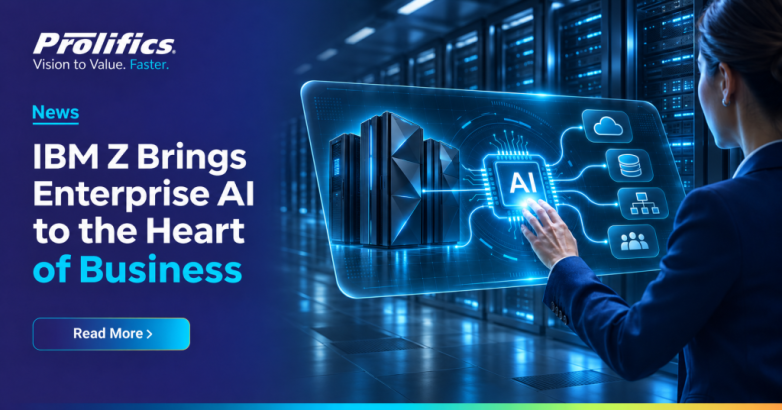
The next opportunity for enterprise AI could be inside the systems already processing your most valuable transactions. IBM is advancing that opportunity through IBM Z, with IBM z17 combining built-in AI acceleration, application modernization capabilities and resilient infrastructure. For business and technology leaders, the platform offers a practical way to explore faster decisions while building on established enterprise investments.
Bring Intelligence Closer to Every Transaction
Powered by the IBM Telum II processor, z17 supports AI inferencing alongside transactional workloads. This creates opportunities to apply predictive models where decisions happen, including fraud detection and financial risk assessment.
IBM reports up to five million inference operations per second with response times below one millisecond, based on an extrapolated internal benchmark. Actual results depend on workload and configuration. For enterprises, the opportunity is to evaluate more transactions while keeping response times aligned with business needs.
Modernize Applications and Connect the Enterprise
IBM Z combines mainframe capabilities with hybrid cloud integration, DevOps and AI-assisted development. IBM highlights tools such as watsonx Code Assistant for Z for application understanding, refactoring and COBOL-to-Java modernization.
For organizations managing complex application estates, these capabilities can support a phased modernization strategy. Teams can identify valuable business logic, improve development practices and connect core systems with newer services. The business case should focus on specific outcomes, such as shorter release cycles, easier integration and better access to operational data.
Strengthen Resilience as AI Adoption Grows
AI initiatives need dependable systems and protected data. IBM Z emphasizes security, cyber resilience and continuous availability, while z17 supports progress toward quantum-safe security. IBM Concert for Z also consolidates operational information to help teams investigate incidents and coordinate responses across their complex mainframe environments.
These capabilities matter when AI becomes part of a critical customer or operational workflow. Organizations should assess access controls, recovery processes and model oversight alongside infrastructure performance. A strong implementation plan connects technology choices to service requirements, so innovation proceeds with clear responsibilities and measurable operational safeguards.
Start with a Measurable Business Use Case
Real value begins with a focused problem. A useful starting point is a transaction or workflow where a faster, better-informed decision could improve customer experience or reduce manual intervention.
Define the baseline before selecting the solution. Agree on measures such as inference latency, model accuracy, operational effort and deployment time. Then validate data readiness, integration dependencies and governance requirements through a scoped pilot before expanding across the enterprise.
Turn IBM Innovation into Outcomes with Prolifics
As an IBM Platinum Business Partner, Prolifics brings expertise in AI, application modernization, enterprise integration and data engineering. Its capabilities help organizations connect IBM technology with the architecture, governance and delivery disciplines needed for practical implementation.
For enterprises evaluating IBM Z within a broader transformation strategy, that starts with aligning platform opportunities to business priorities.
Ready to explore AI at the core of your business? Connect with Prolifics to discuss your modernization goals, prioritize use cases and shape an actionable roadmap.
Sources: IBM Z | IBM z17 | IBM Telum | Prolifics and IBM