As a long-time IBM business partner, we’re thrilled to announce that IBM named Prolifics as a finalist in its 2020 Beacon Awards. Our “Blockchain-Supported Interoperability for Healthcare solution” –generated by our Innovation Center – is recognized in IBM’s Blockchain Trailblazer Award category.
“IBM is proud to recognize Business Partners who strive to enhance client experiences, drive business growth, and change the world…The IBM Beacon Award recognizes Business Partners worldwide who use IBM products and technology to create outstanding solutions and spark innovation,” states IBM on their site announcing this year’s award winners.
Recognizing that blockchain will be a highly sought-after technology, our Innovation Center drew on our healthcare expertise to create demonstration scenarios for the healthcare industry. Blockchain benefits for healthcare include a unified, secured view of data across disparate healthcare entities, provisioning of information necessary for patients to make informed decisions, and overall streamlined claims processing. In short, the outcomes of this solution lead to improved revenue cycle management along with enhanced patient relations.
The solution is currently being leveraged within the healthcare industry to build a blockchain network across multiple business units. This solution will deliver a variety of benefits to the involved organizations, including real-time transparency, customer-centricity, cost savings and business agility.
While the healthcare industry is our immediate focus for this innovative blockchain solution, it is directly applicable and viable across multiple industry segments.
To learn more about Prolifics, visit our website at prolifics.com.
We’re proud to share the news! Prolifics is an IBM 2020 Beacon Award finalist in two categories – “Outstanding Hybrid Cloud Solution” and “Blockchain-Supported Interoperability for Healthcare solution.”
“IBM is proud to recognize Business Partners who strive to enhance client experiences, drive business growth, and change the world…The IBM Beacon Award recognizes Business Partners worldwide who use IBM products and technology to create outstanding solutions and spark innovation,” states IBM on their site announcing this year’s award winners.
IBM, on the company’s website announcing this year’s award winners
Prolifics Open Banking SaaS Solution Recognized in Outstanding Hybrid Cloud Solution Category
The Prolifics UK Innovation Lab originally implemented the solution for a large British banking organization and has since implemented it at multiple major banks in the UK.
Recent Open Banking initiatives in the UK and the EU’s PSD2 are changing how banks, their customers and third parties access, share and secure the customers’ financial information. These regulations reflect customers’ desires for digital access and self-serve functions for financial products and services, as well as ownership and portability of their digital financial accounts and transactions across providers.
Prolifics sees these initiatives, along with similar ones in the US, Middle East, Australia and Asia, as opportunities for financial organizations to reinvent themselves as more open, responsive, customer-centric and partner-friendly. Our Innovation Through Open Banking solution offers:
Securely exposed, open APIs for use by both the business and third-party organizations
A robust SaaS API management platform, leveraging IBM’s leading cloud, API, and integration products
Access to a preconfigured sandbox environment built on IBM Cloud/SaaS software, enabling rapid testing of integration points
A dedicated Prolifics managed services team that helps manage post-deployment complexities, freeing the organization to focus on customer service and future innovation
The solution provides a quick win and a quick path toward compliance with the new regulations. With the solution in place, the client can rapidly build a secured API marketplace, generating new products and services and adding new features to current offerings.
As similar initiatives arise elsewhere in Europe, the UK and around the world, this solution can be quickly adapted to meet those requirements. It is also a good fit for banking organizations seeking to innovate business practices in an open banking, API-centered model. But the base solution isn’t restricted to Banking – Prolifics has also extended the underlying IBM solution to provide capabilities for other industries such as Open Insurance and FHIR for Healthcare.
Prolifics Blockchain Solution Recognized in Blockchain-Supported Interoperability for Healthcare Solution Category
Prolifics Blockchain Solution is a product of our Innovation Center. Recognizing that blockchain will be a highly sought-after technology, the Innovation Center drew on our healthcare expertise to create demonstration scenarios for the healthcare industry. Blockchain benefits for healthcare include a unified, secured view of data across disparate healthcare entities, provisioning of information necessary for patients to make informed decisions, and overall streamlined claims processing. In short, the outcomes of this solution lead to improved revenue cycle management along with enhanced patient relations.
The solution is currently being leveraged within the healthcare industry to build a blockchain network across multiple business units. This solution will deliver a variety of benefits to the involved organizations, including real-time transparency, customer-centricity, cost savings and business agility.
While the healthcare industry is our immediate focus for this innovative blockchain solution, it is directly applicable and viable across multiple industry segments.
To learn more about Prolifics, visit our website at prolifics.com.
Meet Archie, the digital worker that will help you and your team process PPP loans faster and with better accuracy – so you can relieve some of the stress on your employees and make sure your customers stay satisfied.
Understanding data privacy laws is crucial for businesses and consumers alike. The California Consumer Privacy Act (CCPA) and the General Data Protection Regulation (GDPR) are two landmark privacy regulations that give individuals control over their personal data. While both aim to protect privacy, they differ in scope, requirements, and enforcement.
Overview: CCPA vs. GDPR
The CCPA went into effect on January 1, 2020, granting California residents rights over the data businesses collect about them. In contrast, the GDPR, effective since May 2018, applies to all 27 European Union member states and governs how organizations handle personal data.
Though some call the CCPA the “California GDPR,” it differs in key areas such as legal framework, consent requirements, and the breadth of data protection.
Key Differences Between CCPA and GDPR
1. Geographic Scope and Applicability
CCPA: Applies only to California residents. Businesses must meet specific thresholds (e.g., revenue over $25M, processing data of 50,000+ Californians annually, or deriving 50%+ revenue from selling personal information).
GDPR: Applies to any organization worldwide that collects data from EU citizens or individuals located in the EU, regardless of where the company is based.
Takeaway: GDPR has a broader, extraterritorial scope compared to CCPA.
2. Legal Framework and Consent
GDPR: Requires a legal basis for processing data. Consent must be explicit, informed, and freely given, with the option for users to withdraw it at any time.
CCPA: Does not require prior consent to collect personal data. Consumers can opt out of the sale of their data but cannot prevent initial collection.
Key Insight: GDPR emphasizes privacy by default, while CCPA focuses on transparency and consumer control.
3. Rights Granted to Individuals
Both laws grant important rights but differ in specifics:
Right
CCPA
GDPR
Right of Access
✅
✅
Right to Be Informed
✅
✅
Data Portability
✅
✅
Right to Opt-Out
✅
Part of consent withdrawal
Prior Consent
❌
✅ (exclusive to GDPR)
Note: The key differentiator is prior consent, unique to GDPR.
4. Types of Data Covered
CCPA: Covers personal information, including household data that can identify an individual.
GDPR: Covers personal data, including special categories (sensitive data).
Observation: CCPA’s definition is broader in some aspects but less strict than GDPR’s sensitive data categories.
5. Enforcement and Penalties
GDPR: Enforced by national data protection authorities. Fines can reach €20M or 4% of global turnover, depending on the severity of violations.
CCPA: Enforced by California’s Attorney General, with fines up to $2,500 per violation.
Expert Note: GDPR enforcement includes audits and guidance, whereas CCPA enforcement is more reactive and limited in supervision.
6. Who Is Protected?
CCPA: Protects California consumers—residents whose personal information is collected by qualifying businesses.
GDPR: Protects data subjects—any identifiable individual in the EU, including non-EU citizens physically present in the EU.
Summary: CCPA vs. GDPR at a Glance
CCPA: Transparency-driven, consumer-focused, opt-out-based, applies to California.
GDPR: Consent-driven, privacy-first, applies across the EU and globally, includes strict enforcement and sensitive data protection.
Both laws improve privacy and data protection, but GDPR offers stronger, more comprehensive safeguards, while CCPA provides targeted rights for California residents.
How Businesses Can Prepare
Map your data: Identify personal information collected, processed, and shared.
Update privacy policies: Clearly outline consumer rights and how data is handled.
Implement consent management tools: Ensure GDPR-compliant consent for EU visitors.
Add opt-out mechanisms: Provide CCPA-compliant “Do Not Sell My Info” links for California consumers.
Train employees: Build awareness of privacy obligations under both laws.
Pro Tip: Aligning with GDPR standards often helps businesses remain compliant with CCPA, simplifying compliance efforts.
Data breaches are among the most pressing cybersecurity threats today, exposing sensitive information and putting billions of people at risk each year. Organizations across industries continue to face challenges in protecting data, making cybersecurity a top priority for enterprises.
In fact, reports have shown that billions of records can be exposed within short periods due to security gaps. This makes data privacy one of the most critical issues for both individuals and businesses. Understanding major data breach incidents helps highlight the scale of risk and the importance of adopting stronger cybersecurity practices.
Why Data Breaches Matter
Data breaches have been occurring for years, impacting financial data, personal information, and enterprise systems. Sensitive data such as customer records, login credentials, and business-critical information can be exposed when systems are compromised.
Beyond financial loss, organizations also face reputational damage and regulatory consequences. Implementing strong data security policies is essential to minimize these risks and maintain trust.
Notable Data Breaches and Their Impact
Billions of records have been affected by cybersecurity incidents over the past two decades. Below are some of the most widely reported breaches and their impact:
Yahoo (2013) – Affected approximately 3 billion user accounts, exposing personal details and credentials.
Yahoo (2014) – Impacted 500 million accounts, including email addresses and security questions.
First American Financial Corporation (2019) – Exposed 885 million records due to a system design issue.
Marriott International (2014–2018) – Compromised guest data, including passport and reservation details.
Facebook (2019) – Data exposure involving hundreds of millions of user records via third-party integrations.
Adult FriendFinder (2016) – Exposed sensitive user account data, including deleted accounts.
Zynga (2019) – Impacted over 200 million users with account-related data exposure.
Aadhaar (2018) – One of the largest government-related data exposures involving over a billion records.
Verifications.io (2019) – Exposed hundreds of millions of records due to an unsecured database.
eBay (2014) – Affected millions of users through compromised login credentials.
Protecting Data Privacy
With the increasing reliance on digital platforms, protecting personal and enterprise data is critical. Organizations and individuals can reduce risk by adopting best practices such as:
Using strong, unique passwords
Enabling multi-factor authentication (MFA)
Regularly updating security settings
Monitoring systems for unusual activity
Implementing enterprise-grade security frameworks
These practices significantly reduce the likelihood of unauthorized access and data exposure.
Conclusion: Strengthening Cybersecurity
Major data breaches demonstrate that no organization is immune to cybersecurity risks. As technology evolves, so do the methods used to exploit vulnerabilities.
By understanding past incidents and applying strong security measures, businesses can better protect sensitive data and reduce risk. A proactive approach to cybersecurity, combined with modern tools and governance, is essential for long-term resilience.
When Prolifics engineers first learned about HL7’s FHIR standards, in response to the healthcare industry’s challenge with FHIR interoperability and healthcare data interoperability, ideas began pouring into our Innovation Center. The result was our Quick FHIR solution that goes beyond simple FHIR API integration with your existing systems, adding a layer of security plus AI and FHIR and machine learning in healthcare data to help you better manage and analyze your information.
This infographic provides an at-a-glance description of the benefits of FHIR to your health organization. Be sure to click to see the large version.
Who Benefits from FHIR?
Developers
FHIR for developers builds on, co-exists with, and leverages HL7’s earlier product lines (HL7 v2, HL7 v3, CDA) while using common web standards like RESTful services, XML, JSON, HTTP, and OAuth. Developers looking to explore FHIR healthcare standards may find themselves in familiar territory. They will also find the following appealing:
Open-source FHIR tools that are free to use
Comes with out-of-the-box FHIR interoperability
Base resources can be used as-is or adapted as needed
Integrates seamlessly with popular web service technologies
Patients
FHIR for patients makes health data accessible, giving individuals more control over their healthcare decisions. From diet and exercise to treatment and medication, more data means smarter consumers. Patient access to health data through FHIR:
Allows new technologies to aggregate health data, for example, Apple’s Health app
Eliminates duplicate tests and services, reducing costs
Prevents errors from missing or incomplete patient data, supporting better outcomes
Researchers
FHIR for researchers has the potential to transform clinical research, epidemiology, and outcomes studies. Accessible EHR and patient-generated data can mean:
Shorter, less expensive clinical trials, making clinical research with FHIR more efficient
Improved interactions with clinicians and patients
Better risk assessment for new medical products
Physicians
FHIR for physicians combined with FHIR EHR integration allows faster access to patient records and health data. With leveraging AI and machine learning with FHIR, the possibilities expand to:
Improved diagnoses and treatment plans
Shorter patient visits without losing quality of care
Flexibility to change vendors thanks to increased system compatibility
Payers
FHIR for payers helps health insurers adapt to HHS regulations for CMS and ONC FHIR compliance. This allows them to:
Easily update providers on health plan protocols
Enable freer, secure healthcare data exchange of claims and patient information via third-party apps
Automate approval processes, reducing administrative time
We invite you to share this with colleagues and visit our FHIR information hub. If you want to learn more about FHIR adoption benefits for healthcare providers, or need FHIR solutions for health insurance payers that meet FHIR compliance with CMS interoperability rules, contact us at solutions@prolifics.com.
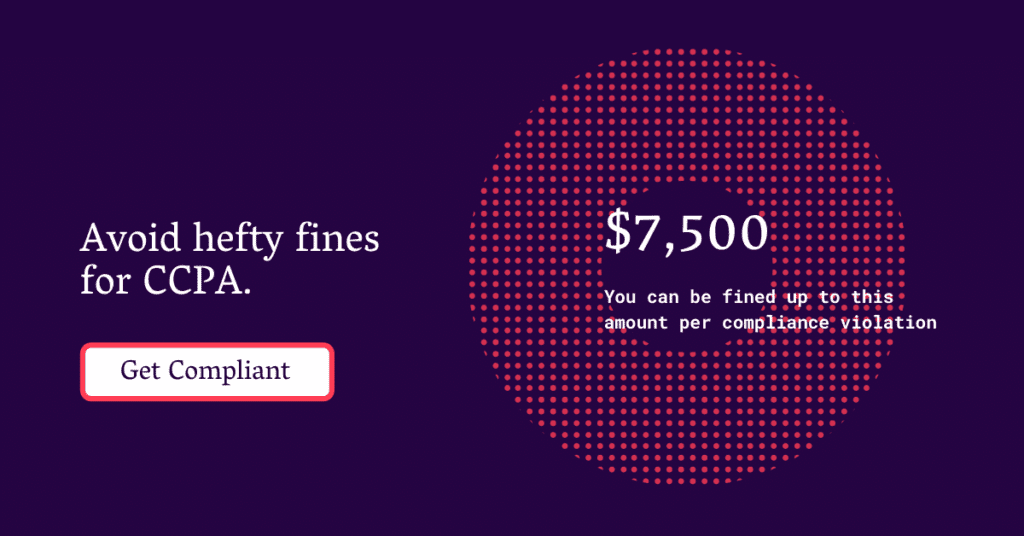
The state of California is now enforcing the California Consumer Privacy Act (CCPA). Starting July 1, businesses face fines of $2,500 per compliance violation, rising to $7,500 if negligence is involved. On top of that, Californians can sue if their personal information is compromised in a data breach—again, if due to company negligence. This makes implementing robust CCPA compliance solutions an urgent priority.
Under California Consumer Privacy Act requirements, Californians have the right to:
Know what personal information of theirs is collected, used, shared, or sold
Request deletion of their personal information
Opt-out of the sale of their personal information
Why CCPA Compliance Solutions Start with Data Knowledge
Achieving CCPA data privacy best practices—much like GDPR compliance before it—begins with understanding your customers’ personally identifiable information (PII). You must be able to answer:
What data do you store?
Where is the data?
Who has access to the data?
What is the data being used for?
This means data governance for CCPA compliance is inseparable from broader initiatives in data management and data security.
Choosing the Right CCPA Compliance Solutions and Tools
There are countless tools claiming to support California data privacy regulations. When evaluating any CCPA compliance assessment software, make sure to ask:
Are You Scanning All My Data?
Some tools only scan file names, column headers, or samples. You need CCPA data scan tools that can deep scan structured, semi-structured, and unstructured data across servers, email systems, shared drives, cloud, and on-premises. Comprehensive CCPA unstructured data scanning ensures you uncover every hidden pocket of PII.
Can the Solution Learn as It Goes?
Look for solutions that use AI for CCPA compliance. Artificial intelligence and machine learning (AI/ML) detect hidden data relationships and create rules that enhance CCPAdata classification and inventory accuracy over time. The benefits of AI/ML in CCPA data privacy solutions include continuous learning and improved data quality insights.
What Will the Data Scan Deliver?
Expect a full inventory of data assets with reports on locations, quality, classifications, and sensitivities. This forms the basis for CCPA personal information protection decisions. A quality-first approach eliminates long debates over definitions by letting the system set rules up front.
How Long Will the Scan Take?
High-quality solutions can complete deep scans in days rather than weeks. Speed matters when aiming to prepare for CCPA compliance efficiently.
Will the Solution Continue to Work for Me?
Compliance isn’t “one and done.” New data constantly flows into your organization. The best tools offer ongoing CCPA compliance monitoring tools to ensure you remain compliant long-term.
How Prolifics Can Help
If you’re wondering how to prepare for CCPA compliance, our experts can help assess your readiness. We offer a CCPA compliance health check services package—an inventory and risk assessment that gives you a clear understanding of your exposure.
We also provide deep data scanning for CCPA compliance through our Data Hawk accelerator, a key technology in any data privacy project. Data Hawk delivers unmatched scanning and interrogation capabilities for both structured and unstructured data.
Whether you need to know questions to ask CCPA data scanning vendors or want to learn what is a CCPA compliance health check, our team has the answers. We ensure our recommendations align with California Consumer Privacy Act requirements and best practices for CCPA personal information protection.
The Business Case for Compliance
Failing to meet CCPA data privacy best practices is costly—not only in fines but also in reputational damage. Investing in CCPA compliance solutions that integrate with your broader data governance for CCPA compliance strategy reduces legal risks and strengthens customer trust.
By embedding AI for CCPA compliance and scalable CCPA data scan tools into your infrastructure, you’ll be better positioned to adapt to evolving California data privacy regulations and other emerging laws.
Ready to protect your data and your reputation? Visit our expert hub for resources on how to protect personal information under the California Consumer Privacy Act or email us at solutions@prolifics.com to get started.
In today’s financial services landscape, organizations are expected to process massive volumes of data with speed, accuracy, and transparency. Auditing, in particular, plays a critical role in maintaining trust, ensuring compliance, and delivering fair outcomes for customers.
This short video highlights how Verus Financial transformed its auditing capabilities by modernizing its analytics environment. By combining advanced analytics platforms with expert guidance, the organization achieved faster insights, higher accuracy, and improved operational efficiency without compromising data integrity.
The problem
Verus Financial specializes in analyzing millions of financial records to identify unclaimed assets and return them to their rightful owners. This work requires extremely high levels of accuracy, as even minor errors can impact customer trust and regulatory compliance.
As data volumes increased, Verus Financial faced a significant challenge: How can millions of records be analyzed quickly and efficiently while maintaining consistent accuracy and audit quality?
Traditional auditing approaches struggled to keep pace with growing datasets. Analysts spent too much time validating data, running manual checks, and reworking reports. This slowed decision-making and limited the organization’s ability to scale operations effectively.
To continue serving customers better and faster, Verus Financial needed a more advanced, data-driven approach to auditing, one that could deliver reliable insights at speed.
The Solution
To address these challenges, Verus Financial implemented IBM InfoSphere and IBM SPSS software as part of a modern analytics and data quality strategy.
These platforms enabled the organization to:
Process large and complex datasets more efficiently
Improve data quality and consistency across audit workflows
Apply predictive analytics to identify trends and anomalies
Reduce manual effort through automation and advanced modelling
Support faster, more confident audit decisions
By leveraging these tools, Verus Financial moved away from slow, manual auditing processes toward a scalable, analytics-driven model. This shift allowed teams to focus on higher-value analysis rather than repetitive data validation tasks.
The role of Prolifics
Prolifics played a key role in ensuring the success of this transformation by bringing deep experience in predictive analytics, data quality, and enterprise data platforms.
Rather than focusing solely on technology implementation, Prolifics adopted a strategic, long-term approach that aligned analytics capabilities with business goals.
Key contributions included:
Architecting predictive analytics models to improve audit accuracy and consistency
Strengthening data quality frameworks to ensure reliable and trustworthy outputs
Acting as a strategic advisor across current initiatives and future analytics roadmaps
Providing coaching, mentoring, and in-depth technical training to internal teams
This hands-on support helped Verus Financial build internal expertise while ensuring the analytics environment could evolve with changing business and regulatory needs.
The Results
The impact of the solution was immediate, measurable, and sustainable. By modernizing its auditing capabilities, Verus Financial achieved significant improvements across accuracy, speed, and efficiency.
Key outcomes included:
99% audit report accuracy, strengthening trust and compliance
Audit iterations increased from 3 to 30 per week, enabling faster insights and decision-making
Analyst training time reduced by 14 months, accelerating productivity and lowering operational costs
These results demonstrate the value of combining advanced analytics technology with expert guidance and strong data governance practices.
Why It Matters for Financial Services
For financial services organizations, rapid and accurate auditing is no longer optional. Customers, regulators, and stakeholders expect transparency, accountability, and timely outcomes.
This case highlights how predictive analytics and data quality solutions can:
Improve audit reliability at scale
Reduce operational bottlenecks
Enable teams to work smarter, not harder
Deliver better customer outcomes faster
It also reinforces the importance of partnering with experienced advisors who understand both the technical and business aspects of enterprise analytics.
Watch the Video
See how Verus Financial achieved rapid auditing capabilities in action.
Answers in Analytics: Portland University Success Study
Problems:
How to streamline budgeting
How to control costs
How to increase student retention
Solution
Portland State University implemented IBM Cognos BI and TMI for control over finances and student retention.
Results
Portland State University now has deeper insight into budgeting and student performance;
It can manage finances to keep tuition costs low.
The role of Prolifics
Prolifics helped PSU structure and automate the university-wide budgeting process;
Prolifics automated integration of Ellucian banner data;
Prolifics extended the solution to include enrollment and tuition revenue planning.
“Prolifics was able to take a budgeting system which was inadequately designed and turned it into a fully functional system which is user friendly, much easier to maintain and incorporates best practices.”
– Robert Naranjo, Business System Analyst/Programmer, Portland State University