The Bad Boys of Blockchain – IBM’s Jason Kelley and Prolifics’ Greg Hodgkinson – discuss Blockchain and its applications in today’s business environment. You’ll also hear about Jason’s journey from US Army Airborne Ranger to the Global Blockchain expert with IBM.
Process Mining and the New Working-From-Home Normal
The pandemic has made a lot of things the New Normal. One of them is having a remote workforce, also known as working from home (WFH). How are processes and procedures changing to accommodate people working remotely? How do you control – or even know about – the changes that may be happening ad hoc or even unintentionally throughout your organization? Process Mining may be the key.
Working from home (WFH) is part of the New Normal
Salesforce Research offers a “Snapshot Research Series – Insights on How Consumers and the Workforce are Navigating Change.” In its “Future of Work” section (filtered for US responses only), we find these interesting responses from worker surveys in early May and mid-June:
67% agree with the statement “The pandemic will permanently change the nature of work.”
42% agree, with only 8% disagreeing, with the statement “Expect employer to reassess long-term remote work policy.”
For “most appealing work scenario,” 73% would want a home or split home/office scenario.
43% – Work from home full-time
30% – Split between home and workplace
27% – Work from workplace full-time
In its May survey titled “Navigating Covid-19, Returning to the Workplace,” the Society for Human Resource Management (SHRM) found that 68% of organizations report that they “probably or definitely” will adopt broader or more flexible work from home policies for all workers.
How will WFH affect processes and procedures?
It may be too early to tell – there are a lot of ad hoc situations going on for processes and procedures to accommodate people working remotely. But there are those giving thought to it.
“Some processes will be easier to move to remote working than others, so it’s important to firstly identify and thoroughly understand how all of your processes operate. You should establish:
Which processes are critical and/or high-risk?
Are there any processes that require someone’s physical presence to complete? This includes any processes to maintain your IT infrastructure.
Have you locked any systems down so they can only be accessed from the office, or only from specific named IP addresses?
Do you have any paper-based processes or processes that cannot be easily moved online?
It is much easier to get a handle on this if you have comprehensive, up-to-date process and data flow maps. If you don’t, I would suggest you begin by identifying and mapping your critical and high-risk processes – these are the ones where any problems will cause the biggest impact.”
Unfortunately, most companies did not have the luxury to do this as lockdowns and quarantines came down pretty quickly and organizations had to scramble with a sudden WFH staff. So, as the New Normal progresses, what’s the best way to get “comprehensive, up-to-date process and data flow maps?” In our view it’s through Process Mining.
What is process mining and how does it work?
Process mining identifies how a process works by following the digital trail of data through the targeted system. Every day you have employees, customers, vendors and others generate a digital footprint when they utilize your company systems. These digital footprints get captured in these systems, such as ERPs, CRMs, application databases, log files, audit tables, Excel documents and many others. Process mining uses these digital footprints to create visualizations and analysis charts for the process.
Many of you may be familiar – unfortunately too familiar – with process mapping and its interviews and flowcharting. Process mining is significantly quicker and more accurate than traditional process mapping. Think of it this way: Process mapping is like asking a lot of people for directions. Process mining is like using your GPS.
Process mining discovers what is actually happening based on the event data captured in enterprise systems. – which is probably now different from what was happening pre-pandemic. Process Mining shows you how data moves through your organization – diagraming the actual (including variations, exceptions, gaps and siloes) against what you want: an instituted policy or procedure; defined standard; or best practice. Don’t take the chance of thinking you know what’s happening in the New Normal – Process Mining will let you know exactly what’s happening.
Prolifics can help.
The “New Normal” is here. You have a vision – don’t let your technology slow you down. Our Process Mining solutions and experience will get you there. Sit down with us – let’s talk about your challenges, review and reevaluate your plans and get you started where it makes the most sense. Vision to Value. Faster. It’s not just our tagline, it’s what drives us. It’s how we deliver solutions and services. It’s our commitment to you – and it’s needed today more than ever. Visit www.prolifics.com or email solutions@prolifics.com.
How Process Mining and RPA Work Together for Quick Wins
Sometimes two technologies complement each other so well that they create immediate value. Process Mining and Robotic Process Automation (RPA) are a perfect example. Together, they deliver measurable cost savings, increased efficiency, and a more productive workforce. Let’s explore how combining these tools can give your business a quick return on investment.
Are You Losing Time and Money Without Realizing It?
Yes — and it’s more common than you think. Every organization has hidden inefficiencies. Employees often waste valuable time on repetitive, manual tasks that no longer make sense.
These outdated processes are so embedded in operations that no one questions them anymore. Examples include:
Loan officers searching through endless emails for missing information
Each of these tasks drains productivity and morale — costing time, money, and talent.
The Hidden Cost of Mundane Work
When employees are stuck doing repetitive work, they quickly lose engagement. This leads to:
More human errors
Lower overall productivity
Higher turnover and training costs
These inefficiencies don’t stay contained — they ripple through departments, slowing down the entire organization.
Finding the Real Problem: From Process Mapping to Process Mining
Traditional process mapping involves lengthy interviews, manual documentation, and subjective assumptions. You might spend weeks gathering insights, only to realize the data is inconsistent or outdated.
The Better Way: Process Mining
Think of process mining as a GPS for your operations. It follows the digital footprints your systems already generate—from ERP, CRM, and databases to log files and Excel sheets.
With Process Mining, you can:
Visualize actual workflows across departments
Identify gaps, delays, and silos in real time
Use hard data to find inefficiencies and areas for improvement
This data-driven approach provides clarity and confidence to optimize processes and align them with your business goals.
Turning Insights into Action with RPA
Once you’ve uncovered inefficiencies through Process Mining, the next step is Robotic Process Automation (RPA).
RPA allows you to automate repetitive, rule-based tasks — quickly, safely, and at scale. Most organizations can move from idea to deployment in 3–4 weeks.
Benefits of RPA
Operates 24/7 with minimal errors
Adapts easily to system changes
Scales to handle seasonal or volume fluctuations
Integrates with AI and machine learning for intelligent automation
This combination of Process Mining and RPA delivers fast, measurable results.
Will Automation Replace My Team?
Not at all. RPA isn’t designed to replace people — it’s built to empower them. By automating repetitive work, employees can focus on higher-value tasks like strategy, customer service, and innovation.
Most teams welcome RPA once they see how much time it saves. It enhances productivity and creates a more satisfying work experience.
How We Can Help
The “new normal” demands speed, agility, and smarter operations. Our Process Mining and RPA experts help you identify where automation makes the biggest impact — and implement it seamlessly.
We’ll collaborate to:
Review your existing processes
Uncover automation opportunities
Deploy and customize digital workers to suit your business
Our approach focuses on delivering value faster — from vision to execution.
Vision to Value. Faster. It’s not just a tagline — it’s our promise.
Use Process Mining to Supercharge Your Customer Journey Mapping
A good customer journey mapping will give you a leg up on your competition. But the mapping usually falls short because it’s hard to nail down your customers’ interactions. Process mining can save the day.
“The customer journey is the complete sum of experiences that customers go through when interacting with your company and brand. Instead of looking at just a part of a transaction or experience, the customer journey documents the full experience of being a customer.”
“Eighty-two percent of organizations have created a customer journey map, but only 47 percent are using those maps effectively. Despite putting hours or days into the plans, working with cross-functional partners, digging into the data and learning more about the customers, nearly half of those organizations are not seeing a return on their time investment.”
In examining why mapping fails, contributors agree on a number of things, one of them being lack of true customer input:
Sometimes we fall into the trap of believing we know more about our customers than we actually do and we don’t do enough external research.
Many Journey Maps are created from the wrong perspective. That is an ‘inside-out’ perspective, or ‘what do we do along the customer journey.’ But this will never unearth the information you need to know.
Basing your (customer journey mapping) on imagination and assumption (rather than customer validation.
Not including customers… we continually run across these maps that were done by talking to internal employees only.
Process Mining can take your customer journey mapping to the next level.
Process Mining uses your data to quickly identify what you’re looking for and get you to your desired business outcomes. Every day your customers generate a digital footprint when they interact with your company systems. These digital footprints get captured in these systems, such as ERPs, CRMs, application databases, log files, audit tables, Excel documents and many others.
Process Mining shows you how your customers’ data moves through your organization – visualizing and diagraming the actual flow, including variations, exceptions, gaps and siloes. Process Mining will let you know exactly what’s happening by using hard data – it’s true customer input generated by the customers themselves, not an opinion from an interview or survey.
You’ll generate fact-based customer journey maps, gaining greater insights and understanding of your customers’ digital interactions, thereby helping to create a better customer experience.
And, unlike other static parts of customer journey mapping, process mining goes forward to become process monitoring – analyzing the process for current performance against the new customer policies, procedures, standards or best practices you put in place.
Prolifics can help.
The “New Normal” is here. You have a vision – don’t let your customers down. Our Process Mining solutions and experience will get you there. Sit down with us – let’s talk about your challenges, review and reevaluate your customer journey plans and get you started where it makes the most sense.
Vision to Value. Faster. It’s not just our tagline, it’s what drives us. It’s how we deliver solutions and services. It’s our commitment to you – and it’s needed today more than ever. Visit www.prolifics.com or email solutions@prolifics.com.
The concept of process mining has been around for years; it’s only recently become popular as advances in digital technology make it an attractive alternative to traditional process mapping.
What Is Process Mining?
As Gartner defines it, “Process mining is designed to discover, monitor and improve real processes (i.e., not assumed processes) by extracting knowledge from event logs readily available in today’s information systems.”
Simply put, process mining identifies process inefficiencies by following the digital trail of data through a targeted system.
How Is It Different from Traditional Process Mapping?
Process mining is significantly quicker and more accurate than mapping through interviews and flowcharting.
Process mapping is like asking a lot of people for directions.
Process mining is like using your GPS.
Here’s a detailed comparison:
1. Process Mapping: Talk… Talk… Talk
Traditional process mapping starts with interviews – lots of them – to understand a process completely.
It usually begins top-down: senior leaders → department heads → supervisors → staff → internal customers → other stakeholders.
Interviews are time-consuming and subjective. Facts may differ due to opinions or competing agendas.
Missing key stakeholders can result in an inaccurate and costly process map.
2. Process Mapping: Might As Well Jump
After interviews, the actual mapping begins:
Often done manually on whiteboards or using software.
The team then analyzes the “as-is” map and creates the “model-to-be.”
Without hard metrics, it’s easy to jump to conclusions about needed fixes.
Departments may resist changes if no measurable data supports them.
3. Process Mining: Data… Data… Data
In contrast, process mining automatically visualizes processes from transaction data.
It discovers what is actually happening using event data captured in enterprise systems.
Employees, customers, and vendors generate digital footprints in ERPs, CRMs, databases, log files, and audit tables.
Process mining creates visualizations and analysis charts for process improvement faster and more accurately than traditional methods.
It identifies process variations and exceptions that interviews might miss.
4. Process Mining: Here’s the Issue, Here’s What You Do
Process mining significantly reduces discovery time and effort while improving accuracy.
Key Outcomes of Process Mining
User Training: Enhance employee efficiency through better training.
Process Change: Add, change, or remove business activities for improved workflows.
Process Optimization: Automate tasks for better performance, compliance, customer engagement, or cost reduction.
Because it’s data-driven, process mining delivers measurable impact. Over time, it can evolve into process monitoring, continuously analyzing current performance – something traditional mapping struggles to do.
Why Work With Prolifics
Prolifics brings the experience and expertise to help organizations leverage process mining effectively.
The “New Normal” is here. You have a vision – don’t let technology slow you down. Our solutions and experience will help you achieve it:
Review and reevaluate your plans
Start where it makes the most sense
Deliver measurable results
Vision to Value. Faster. It’s more than a tagline; it’s how we deliver solutions and services.
Data Fabric and Data Lineage are two terms we see a lot – on websites, in blogs and technical papers – but what’s the relevance? What do we really need to understand about our data and its power?
Manta and Talend send their data experts to visit the Innovation Sandbox.Ernie Ostic (M) and Rolf Heimes (T) answer questions about data and explore its significance in today’s new normal – all delivered with a dose of their personal style and passion for the topic.
Process Mining – isn’t is the same as Process Mapping, or Data Mining? No. And understanding what makes Process Mining different can give you a definite advantage when looking to improve efficiencies in your business. And why should you improve efficiencies? So you can successfully cut costs, improve customer satisfaction, improve employee morale, and increase revenue.
In this video, Process Mining expert and Prolifics’ Global Head of Digital Automation and Cloud Solutions, Anant Gupta, explains process mining and explores the benefits – regardless of your industry. Watch now.
If you’re a lender, or work in IT for a lending institution, you’ve likely felt the ripple effects of the “New Normal” in very specific ways. Interest rates are at historic lows, but what does that really mean for mortgage demand? The Paycheck Protection Program (PPP) arrived like a hurricane—so what’s next? And after so much disruption, what should you be doing to support your employees?
Believe it or not, a digital loan coworker can help with each of these challenges. By integrating digital workers for loan processing into your operations, you can streamline tasks, scale capacity, and improve accuracy without adding unnecessary strain to your team.
1) How a Digital Loan Coworker Helps Manage Mortgage Volume
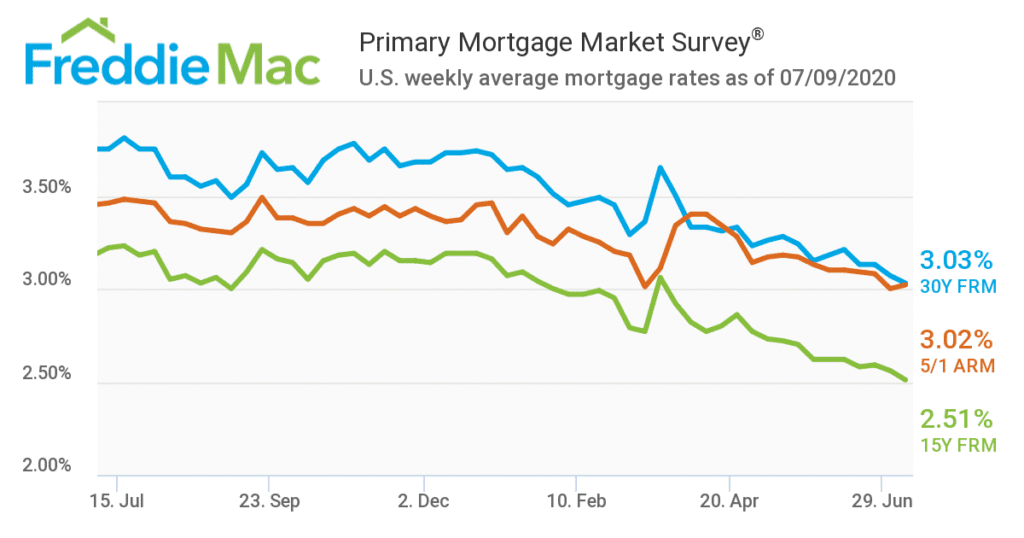
The Federal Home Loan Mortgage Corporation (Freddie Mac) recently reported record-low mortgage rates, with the 30-year fixed-rate mortgage dropping 72 basis points in a year to just 3.03%. While long-term demand remains uncertain, refinancing activity has surged. Freddie Mac’s research shows single-family first lien refinances reached nearly $400 billion—double the previous year’s volume.
Managing workforce size amid fluctuating demand is challenging.
Hire too many staff, and you risk layoffs.
Hire too few, and your team becomes overwhelmed.
Add remote work, and the complexity multiplies.
Here’s where mortgage automation solutions make a difference. A digital loan coworker can scale up or down instantly based on loan volume—no hiring or training required. This approach supports mortgage scalability, enabling you to handle refinancing surges through automated mortgage processing efficiently.
Key benefits include:
Quick response to market fluctuations
Cost-effective scaling without added staff
Improved speed and accuracy in loan processing
2) The Customer Service Example – PPP Loan Forgiveness
Remember the chaos during the initial PPP loan rush—full lobbies, endless phone calls, and piles of paperwork? Many lenders successfully helped businesses secure funding, but the next challenge—PPP loan forgiveness—brought similar pressure.
The SBA released a simplified, borrower-friendly PPP forgiveness application and a three-page “EZ” version for certain cases. Despite these tools, businesses still needed fast results, creating massive processing demands.
A digital loan coworker can streamline this process by:
Reading and sorting incoming emails
Collecting and verifying loan applications
Performing data consistency checks
Routing information automatically to the next step
This intelligent process automation for lenders speeds up forgiveness approvals, improves service quality, and prevents the bottlenecks seen during the initial rollout. It’s also the foundation for scalable PPP loan forgiveness automation, freeing your team to focus on meaningful customer interactions.
3) The Free Up Your Employees Example – Across All Loan Types
Every lending operation handles repetitive, manual tasks—matching data, re-keying information, and navigating disconnected systems. These tasks are time-consuming, error-prone, and lower morale, especially in remote settings.
A digital loan coworker never tires of repetitive work. It runs 24/7, maintains near-zero error rates, and bridges data silos across systems. By leveraging robotic process automation (RPA) in banking, you can:
Reduce human error in loan processing
Save time on manual data entry
Boost employee satisfaction through more engaging work
This isn’t about replacing people—it’s about empowering them. With automation handling routine work, employees can focus on tasks that require human judgment and customer empathy.
Top advantages of digital coworkers in lending:
Improved employee engagement and retention
Higher accuracy and faster turnaround times
Lower operational costs
Partner with Experts Who Understand Lending Automation
The “New Normal” demands efficiency, scalability, and agility. You must adapt quickly to changing market conditions while minimizing costs.
Prolifics offers digital workers for loan processing—like Archie, your own digital loan coworker—designed to deliver fast, accurate, and seamless results. Our expertise covers:
Automation for mortgage refinancing and PPP loans
Scalable solutions for fluctuating lending demand
End-to-end digital transformation for financial institutions
Whether you want to explore how a digital coworker improves mortgage processing or implement PPP loan forgiveness automation, we can help you transform operations and prepare for long-term success.
Ready to get started? Email solutions@prolifics.com to discover how automation can future-proof your lending business.
National Geographic named him the Wizard of Big Data. He works on innovation, national security and privacy with government leaders, think tanks and executives all over the world. And now, Jeff Jonas is talking with you from inside the Innovation Sandbox!
Within just a few weeks, many lenders faced a hurricane of anxious customers and their paperwork for Paycheck Protection Program (PPP) loans. It may feel like we’re now in the calm eye of that hurricane, but it’s not over. The back end of the same hurricane is fast approaching in the form of PPP loan forgiveness. Often where a hurricane goes next is unpredictable, and so it is with PPP forgiveness. For you lenders out there, let’s cover what we know.
How do my customers apply for PPP loan forgiveness?
After the initial May release of a complicated, calculation-rich form, the SBA subsequently issued what they described as a “revised, borrower-friendly Paycheck Protection Program (PPP) loan forgiveness application.” This was in response to mandates in the Paycheck Protection Program Flexibility Act (PPPFA) passed in early June. The revision took the original forgiveness application from 11 pages down to five. You can find the revised SBA form here Lenders – Are You Ready for PPP, Part 2: Forgiveness?.
In addition, the SBA also published a new “EZ version” of the forgiveness application – just three pages – that applies to certain borrowers under specific circumstances. The EZ application requires fewer calculations and less documentation for eligible borrowers – you can find it here Lenders – Are You Ready for PPP, Part 2: Forgiveness?.
According to the SBA, “These changes will result in a more efficient process and make it easier for businesses to realize full forgiveness of their PPP loan.”
What will be forgiven?
To perhaps over-simplify, if business owners spend at least 60 percent of the loan on payroll costs within 24 weeks of receiving the loan, the whole loan will be forgiven. (The owner should spend the remaining percentage on mortgage, rent and/or utilities.) The 24-week period can’t extend beyond Dec. 31, 2020. The PPPFA changed these numbers from 75 percent and eight weeks, with the express purpose of making forgiveness more accessible. If a business owner misses the 60 percent mark, they can still get a portion of the loan forgiven – it’s not an all-or-nothing calculation.
24 is better than eight.
Both new applications give the option of using the original 8-week period (for loans before June 5, 2020) or an extended 24-week period. This should help spread out the forgiveness application crunch. But you should encourage your customers to apply once that 60 percent is reached – and not wait for the 24 weeks. Most businesses would want the debt gone as soon as possible.
Remember – PPP money is still available.
According to the SBA, PPP provided “4.5 million small business loans totaling more than $500 billion to ensure that approximately 50 million hardworking Americans stay connected to their jobs.” There is still about $130 billion available. But hurry – August 8 is now the new deadline for all PPP loan approvals.
Prolifics can help.
Our PPP Digital Loan Officer, Archie, can help you and your customers by processing new PPP loans in two minutes. And, when your customers look to have their loans forgiven, Archie can help you again – he understands the loan forgiveness eligibility rules and process. Visit Archie or email us at solutions@prolifics.com.