At Prolifics, we’re incredibly excited to kick off “Prolifics June of Gen AI for Business,” an internal month-long initiative dedicated to exploring and leveraging artificial intelligence (AI) to create meaningful business value. This internal initiative builds on our recent successes and insights, with a sharpened focus on “Creating Business Value with AI and Automation.”
Our Journey with Gen AI
AI is transforming the way we do business, and it’s crucial for us to stay ahead of the curve. This month is about learning, innovating, and applying AI to drive real value for our clients” says Gregory Hodgkinson, our CTO.
In the past few months, we’ve successfully integrated advanced generative AI solutions into client projects, significantly boosting business value and operational efficiency. This success has not only earned us recognition but also strengthened our partnerships, particularly with IBM. The increasing interest in AI use cases from clients and prospects highlights the relevance and potential of our solutions.
Our Objectives for June:
Our goal is to show clients how AI can create real, measurable value for their businesses notes Satya Bolli, Chairman & CEO of Prolifics. “We want to make the benefits of AI clear and accessible to everyone.“
Focus on AI Business Value: We aim to empower our teams to articulate and demonstrate the tangible business benefits of AI to our clients.
Deepen AI Knowledge: Enhance understanding of AI technologies, solution patterns, and architectures that meet client needs and tap into our skills in Data, Integration, Process Automation and Testing.
Innovate with AI: Encourage innovation both internally and with clients, fostering a culture of creativity.
Continuous Learning and Upskilling: Promote ongoing learning to keep our teams at the forefront of AI advancements.
Week One Highlights
Wednesday, June 5th – Welcome and Kickoff – AI Growth Update
Gregory Hodgkinson, our CTO, and Ajay Madwesh, our Vice President of Offering Management, will provide an engaging update on AI growth. They will explore how the state of the art has evolved, the broader landscape of AI beyond just generative models, and what these developments mean for our business. They will also showcase a catalog of AI use cases we’ve implemented and provide guidance on the business case for each.
Understanding the broader landscape of AI and its practical applications is key to driving business success,” says Greg Hodgkinson. “This session will give you insights into how we’ve implemented AI solutions and the business value they’ve generated.”
Thursday, June 6th – Learning AI @ Prolifics
Enhance your AI skills with Kalyan Ganjam leading a session on the importance of AI training. We’ll introduce the new curriculum at Prolifics University, covering both fundamental and advanced courses. This session will help you understand your baseline knowledge level and showcase new courses tailored to meet industry demands.
Training and education are critical components of our strategy. We want to equip our teams with the knowledge they need to succeed in an AI-driven world” says Satya Bolli.
Looking Forward
June is set to be a transformative month for Prolifics. Our commitment to excellence, integrity, and collaboration will guide us as we use AI and automation to drive further success. We encourage everyone to participate enthusiastically in this initiative. Together, we are making this a month of innovation, collaboration, and success.
Our commitment to excellence and collaboration will guide us through this journey. Let’s make this month of AI a landmark event for Prolifics” concludes Satya Bolli.
Prolifics understands firsthand the importance of accessible and quality healthcare. If you’re someone who works a full-time job, ‘tries your best’ to attend routine medical care and feels relatively secure in your health and economic stability – you may often forget what a blessing it is to have access to these types of resources. However, this luxury remains out of reach for many communities worldwide, including those in West Zone Hyderabad, where hardworking individuals struggle to access essential healthcare services.
West Zone Hyderabad is home to over a million residents, predominantly comprises hardworking individuals from lower-income backgrounds, striving to make ends meet through construction and support services. Yet, amidst their toil, access to quality healthcare remains a distant dream for many.
The community grapples with multifaceted challenges, from low health awareness and limited access to affordability issues and accountability concerns. These obstacles create barriers to healthcare, leaving vulnerable populations underserved and at risk. Addressing these challenges requires collaborative efforts to ensure equitable healthcare for all.
A Catalyst for Change
The CR Foundation Rotary Prolifics Diagnostic Centre aims to change that narrative by offering free or subsidized diagnostic tests and consultations, ensuring that healthcare is no longer a luxury but a fundamental right for all. Spearheaded by the Rotary Club of Hyderabad Deccan and fueled by the generosity of organizations like Prolifics, this center stands as a testament to the transformative power of collaboration.
Equipped with cutting-edge diagnostic facilities encompassing Pathology, Ultrasound, TMT, ECG, X-ray, and CT Scan, the center leaves no stone unturned in providing thorough medical assessments. Moreover, its polyclinic setup, boasting services such as Physiotherapy, ENT, Dental, and Specialist Consultations, ensures that patients receive holistic care under one roof, eliminating the need for arduous journeys to multiple healthcare facilities.
Unwavering Commitment to our Communities
In a moment of profound significance, echoing our unwavering commitment to community welfare, Satya Bolli, the Managing Director of Prolifics, stood with pride at the inauguration of the CR Foundation Rotary Prolifics Diagnostic Centre on Sunday, May 5, 2024. Satya remarked, “At Prolifics, we believe that true success is measured not only by financial gains but by the positive impact we create in the lives of others. Our involvement in initiatives like the CR Foundation Rotary Prolifics Diagnostic Centre embodies this ethos, reflecting our unwavering dedication to corporate social responsibility (CSR) and community empowerment.”
Together, let’s continue to break down barriers, champion inclusivity, and pave the way for a healthier, more vibrant future for all. In addition to our commitment, we’re proud to announce a donation of Rs. 2.5 crores towards this cause. This center embodies the collaborative spirit needed to address the challenges facing the West Zone’s healthcare system, particularly in terms of access, affordability, and awareness. Through initiatives like this, we can work towards ensuring that healthcare becomes a universal right, rather than a privilege afforded only to a fortunate few.
Note to Readers
Your support and engagement are vital in spreading awareness and fostering positive change in healthcare accessibility. Consider joining us in this endeavor by donating or volunteering your time. Together, we can make a tangible difference in the lives of millions, ensuring that healthcare remains a fundamental right, not a privilege. Thank you for being part of this journey towards a healthier, more equitable society.
In any complex physical workflow process, such as assembling an engine, maintaining or repairing a machine, or quality inspecting mechanisms or instruments, there are two things happening:
The operator is interacting with the complex process in a real, physical environment
The operator needs a high level of knowledge of the process and an understanding of the physical environment
Since the process is, in fact, complex, an operator will need additional information to complete the task. This information usually comes in the form of:
A manual that’s perhaps hundreds of pages long
Just “figuring it out” themselves
Asking someone else
Any of these information forms are problematic; they can lead to delays, inefficiencies, mistakes and reworks – costing the process owners time and money.
New technologies and the connected worker
Prolifics has taken new technologies, each powerful in their own right, and combined them into a very evolved, live digital system that connects and integrates the operator with the complex workflow, helping the worker continuously address – in real time – whatever challenges arise. These layers of value are made up of:
Augmented/mixed reality wearables – these headsets provide the view into reality with a digital overlay. For example, it could display a schematic of the machine an operator is repairing, or a parts list for the engine the operator is building. Wearables actually increase safety, as the headsets free the operator’s hands from manuals, tablets or other information-providing handhelds.
Artificial intelligence (AI) computer vision – is one channel of insight into understanding the physical environment and assisting the operator through it. It interprets the environment using computer vision, and then uses AI to understand what the operator is looking at and pull the right information.
Generative pre-trained transformers (GPT) – creates the ability in an application to generate human-like text and have discussions or answer questions in a human-like, conversational way, as well as generate content like images.
Combining these technologies together in effect creates a “live digital assistant,” a form that passes the exactly needed information to the operator, in real time, as the operator works with the complex process. These technologies don’t replace the worker – they greatly enhance the operator’s ability to perform their job.
Scenario
The quality inspection of a machine requires a human/manual component – it requires the deductive logic of human beings. And while your quality inspectors (operators) must adhere to documented specifications, there is always the possibility of subjectivity – any one particular operator may have a different way of interpreting situations or assessing certain defects.
The quality inspection is usually a sequence of steps that the operator needs to perform, and with each step there would be a sequence of activities. The mixed reality system would provide these sequences to the operator, either visually or audibly. The AI computer vision knows at all times what the operator is looking at, and can provide a 3D, holographic arrow to point the operator to the right place. The AI computer vision could also detect defects that the operator either could not see or perhaps missed, and then GPT would provide an analysis with instructional details for a suggested resolution.
The technologies of the connected worker help your operators locate defects better and help them conduct inspections faster and more precisely as a whole. It removes some of the subjectivity, raising the consistency value of all the inspections as well. The connected worker brings greater speed, better precision and higher consistency to this quality inspection.
More on this Prolifics offering – Industrial Metaverse and Connected Worker Experiences
The “Industrial Metaverse” is the deep integration of information, communication, and the real economy. The same is true for the “Connected Worker.” The ultimate goal is to build a new, efficient industrial system, both manufacturing and service, across the whole value chain.
Internet of Things (IoT) – IoT represents physical devices connected globally through the internet, all modified with sensors, software, processing abilities, and other tech so they can exchange data among devices and systems.
Digital twin – This is the digital representation of an actual physical product, system, or process. The “twin” serves as an exact digital counterpart to run simulations on integration, monitoring, and maintenance.
Virtual and augmented reality (mixed reality) – Virtual reality (VR) provides near real experiences in a virtual way, while augmented reality (AR) enhances the real world by superimposing computer-generated information on top of it. Both use specialized headset equipment, though a less immersive experience is available over normal devices.
AI computer vision – With equipment or in manufacturing, it provides analytics that can uncover nuanced issues undetectable through traditional quantitative data. This can predict failure earlier and prescribe steps to extend the useful life.
At Prolifics, the work we do with our clients matters. Whether it’s literally keeping the lights on for thousands of families, improving access to medical care, helping prevent worldwide fraud or protecting the integrity and speed of supply chains, innovation and automation are significant parts of our culture. While our competitors are throwing more bodies at a project, we are applying automation to manage costs, reduce errors and deliver your results faster.
Let’s accelerate your transformation journeys throughout the digital environment – Data & AI, Integration & Applications, Business Automation, DevXOps, Test Automation, and Cybersecurity. We treat our digital deliverables like a customized product – using agile practices to deliver immediate and ongoing increases in value. Visit prolifics.com.
Orlando, Fla., April 23, 2024 – Prolifics, a global digital engineering leader, has announced the launch of the Manta–Prolifics Purview (MPP) Connector, developed in collaboration with Manta. This innovative solution enhances visibility, governance, and scalability for managing data assets—empowering organizations to make more informed decisions.
The MPP Connector is designed for Microsoft Purview customers seeking to strengthen their data lineage capabilities beyond the standard scanning and ingestion features provided by Purview.
How It Works
The MPP Connector seamlessly integrates Manta’s automatic data lineage collection into Microsoft Purview. Manta extracts metadata, builds lineage relationships, and exports the information. The MPP Connector then reorganizes this data for effortless loading into Purview. This unified view allows organizations to trace data movement across systems, addressing key challenges such as data quality improvement, compliance, impact analysis, and understanding architectures for cloud migration.
Key Features of the MPP Connector
Enhanced Lineage Integration: Incorporates Manta’s advanced lineage capabilities directly into existing Microsoft Purview solutions.
Comprehensive Governance: Strengthens data governance and compliance initiatives for improved control and reliability.
Unified Lineage Capture: Expands lineage visibility across diverse technologies (e.g., ETL tools, databases, BI platforms) beyond IBM DataStage, SSIS, MS SQL, Power BI, and SSAS—integrating lineage from any Manta-supported source for broader insights.
Deeper Lineage Access: Provides direct links back to Manta’s detailed lineage viewer, offering a more comprehensive perspective than the Purview UI alone.
Key Benefits
Comprehensive Visibility: Achieve end-to-end transparency into data assets and lineage relationships, enhancing data quality, compliance, and impact analysis.
Streamlined Governance: Enable effective governance initiatives that reduce risks, optimize costs, and ensure regulatory compliance.
Scalability: Scale data lineage capabilities to meet evolving business demands, driving agility and adaptability in dynamic data environments.
Satya Bolli, Chairman of Prolifics, stated,
“Our collaboration with Manta equips clients with innovative ways to leverage data for decision-making and enhanced business value.”
With Manta and Prolifics, you’ll always know what’s happening with your data.
Explore how the MPP Connector enhanced data management for a leading wireless services provider—ensuring clear data flow and future readiness.
About Prolifics
Prolifics is a digital engineering and consulting firm helping clients navigate and accelerate their digital transformation journeys. We deliver measurable outcomes through a systematic approach to rapid, enterprise-grade continuous innovation. Our agile delivery model ensures immediate and ongoing business value.
We provide consulting, engineering, and managed services across:
Data & AI, Integration & Applications, Business Automation, DevXOps, Test Automation, and Cybersecurity—at any stage of your digital journey.
Our annual North America Sales Kickoff in March 2024 brought together everyone from our executive leadership team to our sales, engineering, innovation, and delivery teams. It was a collaborative effort where every voice mattered. Seriously, “everyone” in attendance had the opportunity to speak. But for time’s sake, let’s review some key insights from Prolifics’ executive leadership team.
Preparing for the Journey
At Prolifics, our core values—like innovation, accountability, and trust—guide everything we do. Satya Bolli, our esteemed Chairman & CEO says, “We don’t settle for mediocrity; we strive for excellence, constantly challenging one another to improve.” Satya reminds us to stay true to our values and strive for excellence every day. Every morning before his run, Satya completes a set of dynamic stretches to prepare for the body for physical activity.
Much like Satya’s pre-run exercises, where dynamic stretches prepare him for the journey ahead, we exercise our core values to fortify our company’s foundation.
Satya’s challenge to us is simple: How can we be truly admired unless we do something extraordinary?
His words remind us that what sets us apart isn’t just what we do, but how we do it. It’s about embodying a mindset of continuous improvement and pushing boundaries.
Our passion for innovation drives us forward. We’re not satisfied with the status quo; we’re always seeking new ways to innovate and disrupt the industry. Whether it’s developing cutting-edge solutions, leveraging emerging technologies, or reimagining processes, innovation is at the heart of everything we do.
But innovation doesn’t happen in a vacuum. It requires collaboration—across teams, departments, and geographies. We believe that the best ideas come from diverse perspectives, and we actively seek out input from all corners of our organization.
Looking Forward
As we look ahead to FY25 and beyond, our commitment to excellence remains unwavering. Kirsten Craft, our esteemed CRO, emphasizes our core mission of client success: “We do what we do to help our customers succeed.” She stresses the importance of prioritizing customer satisfaction and ensuring it remains central to our efforts.
Despite our smaller size compared to competitors, Kirsten emphasizes our strengths: “We have clients who love us. We have more talent, investment, and passion than our competitors.”
Our recent achievements are paving the way for us to serve clients in new and smarter ways at any point on their digital transformation journey. Kirsten notes that many CIOs are focusing on driving app modernization, with cloud playing a crucial role. Despite challenges such as customers still in data centers and experiencing cloud shock, Kirsten reminds us to look at challenges as an opportunity to grow and try new things.
She reassures that Prolifics is prepared to assist with these challenges, leveraging our expertise in FinOps to help clients navigate cloud spend efficiently and mitigate any cloud shock they may encounter.
A heartfelt shoutout to the White Rock Center of Hope for an incredible day of volunteering! It was an honor to be a part of your mission to support our East Dallas neighbors. Together, we made a real impact – from lending a hand with food and clothing to empowering those in need.
Kirsten’s remarks inspire us to continue prioritizing customer success, leveraging our strengths, and driving positive outcomes for both our clients and our organization. She reaffirms our identity as the driving force behind meaningful change: “I know how hard you all work. We’re the people that make things happen.“
Making Things Happen
Our IT leadership team is on board as we actively seek ways to enhance productivity, save costs, and accelerate the journey of customer and employee experiences through innovation.
Greg Hodgkinson, our CTO and Head of Engineering, underscores the exceptional capabilities of our Prolifics engineering teams, emphasizing that we have all the necessary ingredients to achieve success. He highlights our commitment to continuous reinvention, particularly through AI and digital innovation, stating, “We’re helping our clients (and our Prolifics family) reinvent business, customer experience, and productivity through AI and innovation.”
Anant Gupta, our COO, stresses the importance of AI in our work. He highlights how using AI and our unique technology ensures that our solutions are reliable and efficient every time. This means our customers can count on us to deliver consistently excellent results. “It’s about making their lives easier and helping them achieve their goals with confidence.”
Delivering Value, Faster
In our delivery process, we prioritize excellence at every stage. We offer various options as proof of delivery to our customers and streamline their processes and governance models. Ajay Malgaonkar, Head of Global Delivery, emphasizes the importance of delivering tangible business value from the outset, focusing on solving clients’ problems and maximizing their benefits. Our use of IP and accelerators further expedites the delivery process, enabling us to meet and exceed client expectations.
As we navigate the future, these principles serve as guiding lights, propelling us toward meaningful change and transformation.
Partnerships and Speaker Appreciation
We extend our sincerest thanks to our IBM speakers for their invaluable contributions and unwavering support. Our partnerships are vital to our success at Prolifics. They expand our capabilities and enable us to deliver exceptional value to our clients.
Rick Bjorck, VP, Ecosystem, IBM Americas, fosters collaboration and innovation, driving strategic partnerships that empower us to deliver cutting-edge solutions.
Madison Gooch, VP, IBM watsonx, brings expertise in AI and cognitive technologies, shaping our approach to innovation and digital transformation.
Tushar Bajaj, VP, IBM FinOps, AIOps & Automation Sales, guides us in navigating complex challenges, optimizing cloud spend efficiency for our clients.
Together, we’re driving positive change and shaping the future of business.
Conclusion
As we look ahead to FY25, our plans are ambitious. We’re not content with standing still; we’re determined to continue our journey of growth and evolution. By expanding into new markets, deepening our expertise in emerging technologies, and creating new partnerships, we’re committed to charting a course for success.
But our success isn’t just measured in terms of revenue or market share; it’s measured in the impact we have on our clients’ businesses. It’s measured in the solutions we deliver, the problems we solve, and the value we create. And as we embark on this journey together, one thing is clear: the future is bright for our clients.
About Prolifics
At Prolifics, the work we do with our clients matters. Whether it’s literally keeping the lights on for thousands of families, improving access to medical care, helping prevent worldwide fraud or protecting the integrity and speed of supply chains, innovation and automation are significant parts of our culture. While our competitors are throwing more bodies at a project, we are applying automation and AI to manage costs, reduce errors and deliver your results faster. Let’s accelerate your transformation journeys throughout the digital environment – Data & AI, Integration & Applications, Business Automation, DevXOps, and Test Automation. We treat our digital deliverables like a customized product – using agile practices to deliver immediate and ongoing increases in value.
Our long-standing client, an International Retailer (IR), is a global leader in fashion and accessories. Known for its iconic brands, IR has evolved into a lifestyle destination for fashion enthusiasts worldwide.
For Business Leaders
We’re undertaking a new project for IR – “Order Management System (OMS) Regionalization.” Currently, IR’s order management system is centralized, on-premises, in one location. IR wants to move its OMS to various regions in the cloud for, in part, the following reasons:
Minimize service disruptions: Unlike an outage in a centralized system, an outage in one region will not affect other regions
Enhance user experience: Regional cloud computing reduces latency in that area, giving faster processing and improving efficiency for users
Comply with regulations: Many jurisdictions are enacting rules about local transactions being processed in the jurisdiction itself; or local information being only locally stored
Unlock scalability and cost efficiency: The cloud gives more flexibility and cost efficiency for future growth, integrations and applications
Our integration SMEs are leading this initiative and have created a detailed technical presentation for this project.
Prolifics integration software architects Gurumoorthy Nagarajan and Raveendra Nanjundappa will present the technical details of this project at IBM TechCon 2024, a TechXchange Virtual Experience.
In their session, “Modernize Your Integrations with IBM Cloud Pak for Integration,” they will cover:
Adoption of Cloud Pak for Integration for scalable, cloud-native API and event-driven integration.
Transitioning key components such as DataPower, API Connect, and ACE.
How this cloud transformation creates a robust, cost-efficient ecosystem.
Session Details:
Track: API Management & Gateways
Session 134: March 21, 1:25 – 2:25 PM ET
IBM TechCon is the premier virtual technical event from IBM, featuring six tracks that cover the entire IBM product ecosystem.
Don’t miss this opportunity to explore our work with IR and gain deep technical insights.
Learn more about IBM TechCon 2024
Register for IBM TechCon 2024 and sign up for Session 134
Additionally, Raveendra has authored a Prolifics How-To Guide: “Migrating IBM Integration Bus to IBM App Connect on Amazon EKS Platform Using Operators” – a comprehensive technical guide available.
About Prolifics
At Prolifics, the work we do with clients drives meaningful impact. Whether it’s improving access to medical care, preventing global fraud, or securing supply chains, innovation and automation are central to our approach.
Unlike competitors who simply scale teams, we leverage AI and automation to reduce costs, minimize errors, and accelerate delivery.
We help organizations accelerate their digital transformation journeys across:
Data & AI
Integration & Applications
Business Automation
DevXOps & Test Automation
Our agile approach ensures that every digital deliverable is treated like a customized product, providing immediate and ongoing business value.
International Women’s Day (IWD) 2024 is Friday, March 8, and is “a global celebration of the social, economic, cultural, and political achievements of women.” IWD marks both the progress made in gender equality and the work that still remains.
This year’s theme is “Inspire Inclusion” – meaning to celebrate diversity and empowerment not only on IWD, but throughout the year. Per the IWD site:
“When we inspire others to understand and value women’s inclusion, we forge a better world. And when women themselves are inspired to be included, there’s a sense of belonging, relevance, and empowerment. Collectively, let’s forge a more inclusive world for women.”
Women in technology has long been a subject of attention and study and is certainly important to a company like Prolifics. Current statistics have women making up about a third of the tech-related workforce; at Prolifics that number is higher, with more than 40 percent. So, staying with the IWD theme of inspiring inclusion, we asked several of the inspiring women here at Prolifics the following: “What advice would you give to a woman who wants to be successful in a tech company?”
“Learn as much as you can, volunteer to lead activities (no matter how small) and give 200% to everything you do.”
– Kirsten Craft, Chief Revenue Officer – North America
“If you’re a woman aiming to make your mark in the tech world, here’s a tip: focus on mastering a particular area and become the expert everyone turns to. The tech landscape is always on the move, evolving at lightning speed, so being known for a unique set of skills can truly set you apart. Consider it your personal brand of magic – it not only boosts your value within your current team but also puts you on the radar across the industry. This approach involves a commitment to never stop learning, seizing every opportunity to enhance your abilities, and keeping your finger on the pulse of the latest trends and developments in your specialty.”
– Eva Khalil, Competency Lead – Integration & Platforms
“‘Build relationships and stay curious.’ The work that I do is fundamentally about supporting each other. So being able to tap into the relationships I have built is invaluable, especially when facing challenges/obstacles.”
– Amrith Kaur-Maldonado, Product Support Manager
“Do not let the ever-changing pace of technology intimidate you. As you learn, store your knowledge as, ‘How can this help my employees, my customers, or me?”’
Lyn White, Senior Manager – Global Software Sales
Are you looking for a tech company that inspires inclusion? Your path to becoming a Prolifian starts here.
About Prolifics
At Prolifics, the work we do with our clients matters. Whether it’s literally keeping the lights on for thousands of families, improving access to medical care, helping prevent worldwide fraud or protecting the integrity and speed of supply chains, innovation and automation are significant parts of our culture. While our competitors are throwing more bodies at a project, we are applying automation and AI to manage costs, reduce errors and deliver your results faster. Let’s accelerate your transformation journeys throughout the digital environment – Data & AI, Integration & Applications, Business Automation, DevXOps, and Test Automation. We treat our digital deliverables like a customized product – using agile practices to deliver immediate and ongoing increases in value. Visitprolifics.comto learn more.
During a recent energy and utilities event, industry leaders showcased a shared commitment to creating a brighter future through digital transformation, for 2024 and beyond.
Here’s a snapshot of the top objectives guiding these efforts:
AI Integration: Smarter Decision-Making
Who cares? Operations teams, data analysts, and maintenance engineers seeking to optimize operational efficiency and reduce maintenance costs.
Why it matters: With vast amounts of data generated in the industry, AI integration offers a streamlined approach to analyze complex data sets, enabling quicker and more informed decision-making. By leveraging AI algorithms at the grid edge and behind-the-meter, companies can analyze historical maintenance records, weather patterns, and equipment performance data to predict potential failures and optimize maintenance schedules.
Example technology solution types: AI-powered predictive maintenance platforms, machine learning algorithms, IoT sensors for data collection.
Wildfire Management: Prioritizing Safety
Who cares? Infrastructure management teams, community outreach coordinators, and environmental scientists aiming to reduce wildfire risks and protect communities.
Why it matters: The increasing threat of wildfires poses significant risks to communities and infrastructure. By prioritizing wildfire management through digital tools, predictive analytics, and IoT sensors, organizations can effectively identify high-risk areas at the distribution level, implement preventive measures, and enhance community safety and resilience.
Example technology solution types: GIS-based wildfire risk mapping tools, IoT sensors for environmental monitoring, community alert systems.
Smart Metering for EVs: Keeping Pace with Innovation
Who cares? Grid operators, energy planners, and sustainability managers looking to accommodate the increased electricity demand without compromising reliability.
Why it matters: As electric vehicle usage continues to rise, ensuring the energy grid can handle the increased demand becomes imperative. Smart metering technology offers real-time monitoring and optimization capabilities, allowing providers to efficiently manage energy consumption, balance grid loads, and meet the evolving needs of electric vehicle owners. By implementing smart metering solutions and dynamic pricing schemes, companies can encourage efficient use of electricity, particularly during off-peak charging periods.
Example technology solution types: Smart meters with bidirectional communication, IoT-enabled charging stations, demand response software.
Who cares? Customer service teams, marketing departments, and sales representatives aiming to improve customer satisfaction, loyalty, and overall experience.
Why it matters: Customer engagement plays a crucial role in retaining and attracting customers. Salesforce integration streamlines interactions, enables personalized experiences, and empowers companies to deliver targeted marketing offers and proactive customer support. Leveraging customer data from smart metering systems and electric vehicle charging stations, organizations can tailor recommendations and support initiatives based on individual preferences and behavior, enhancing overall customer experience and loyalty.
Example technology solution types: Salesforce CRM integration, customer data platforms, marketing automation software.
Seamless Integration and Testing: Ensuring Reliability
Who cares? IT teams, system integrators, and software developers aiming to reduce system downtime and improve system performance.
Why it matters: Seamless integration and testing are vital for ensuring the reliability and performance of systems and applications. By minimizing disruptions and optimizing efficiency through thorough testing processes, organizations can enhance system reliability, improve end-user experience, and mitigate potential risks and failures. Continuous performance monitoring at the distribution and transmission levels ensures smoother, more consistent performance, leading to increased productivity and satisfaction.
Who cares? C-suite executives, innovation teams, and strategic planners seeking to increase market share and drive revenue.
Why it matters: Innovation is key to driving growth and staying ahead of the competition. Allocating capital resources to strategic digital transformation initiatives enables organizations to explore new markets, develop groundbreaking products, and generate revenue streams. By investing in research and development projects and technology partnerships related to smart cities, electric vehicles, and grid-edge technologies, companies can drive innovation, capture market share, and position themselves as industry leaders.
At Prolifics, we know E&U and we’ll help you keep the lights on. As a digital engineering and consulting firm, we work with energy and utility companies on a wide range of issues, providing our clients with inventive, cost-effective solutions. We’ll help you navigate and accelerate your digital transformation journey – and power your success. Visit our Energy & Utilities page to learn more.
As more and more corporations are moving towards cloud deployment, IBM has taken the right step to enable its integration stack to be cloud native. One such integration component is IBM App Connect Enterprise (ACE). IBM ACE is the one-stop solution to connect any application. In this Prolifics How-To Guide, we’ll learn step-by-step how to migrate IBM Integration Bus (IIB) to ACE on Kubernetes platform, specifically the AWS EKS environment.
Hyderabad, INDIA, February 21, 2024 – Prolifics, a global digital engineering leader, is proud to announce that it has received four prestigious awards at the 32nd edition of the World HRD Congress, held last week in Mumbai, India.
The World HRD Congress recognizes outstanding achievements in human resource practices. Prolifics received the following honors:
Dream Companies to Work For: Ranked #6
Best Employer Brand Award 2024
Award for Excellence in Talent Management
Dream Companies to Work For – IT Sector
Satya Bolli, Chairman and Managing Director of Prolifics, said,
We’re thrilled to have received these World HRD Congress awards. At Prolifics, we’re deeply committed to attracting, nurturing, and retaining top talent. These accolades are a testament to our ongoing efforts to make Prolifics the preferred employer in the IT industry.
Prolifics is a consistent, high-ranking recipient of the “Dream Companies to Work For” recognition. Along with this year’s honors, the company has previously received multiple awards for leadership development programs, workplace best practices, and individual achievements by its HR professionals.
Partha Patnaik, Global Head of Human Resources at Prolifics, said,
We’re proud of this recognition—it reflects our ability to attract great talent, which in turn draws more great talent. This continuous cycle fuels innovation and delivers better outcomes for our clients.
The World HRD Congress, sponsored by the HR development and employment periodical Times Ascent, honors organizations that achieve tangible business results through innovative HR initiatives that promote global best practices.
Prolifics continues to seek the best and brightest minds to join its team. Start your career as a “Prolifian” here.
About Prolifics
Prolifics is a digital engineering and IT consulting company delivering outcomes that matter. Innovation and automation are integral to our culture. While others add more resources to a project, we apply automation to manage costs, reduce errors, and deliver results faster.
We accelerate digital transformation journeys across Data & AI, Integration & Applications, Business Automation, DevXOps, and Test Automation. We treat every digital deliverable like a customized product—using agile practices to deliver immediate and continuous value.




 Enhance your AI skills with Kalyan Ganjam leading a session on the importance of AI training. We’ll introduce the new curriculum at Prolifics University, covering both fundamental and advanced courses. This session will help you understand your baseline knowledge level and showcase new courses tailored to meet industry demands.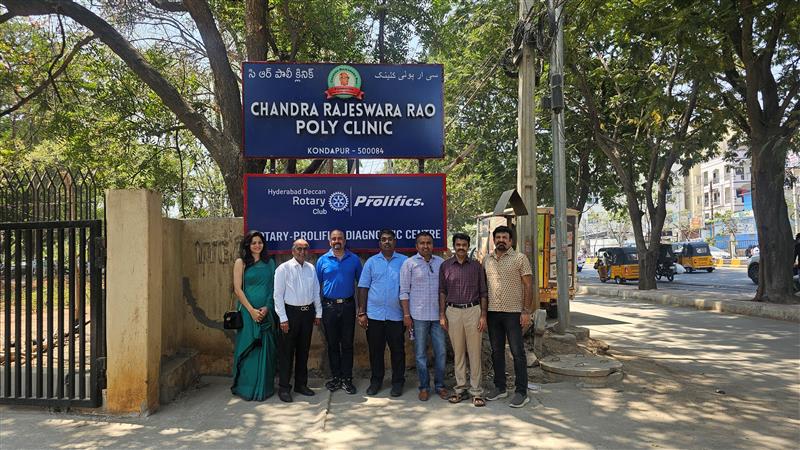
 The
The 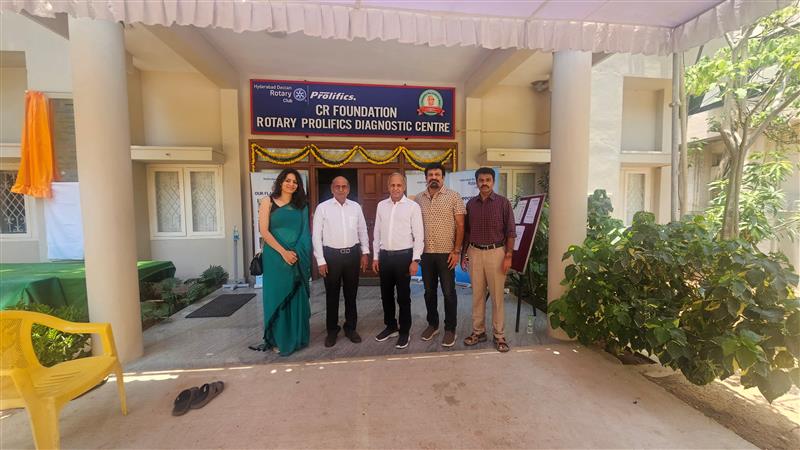
 In a moment of profound significance, echoing our unwavering commitment to community welfare, Satya Bolli, the Managing Director of Prolifics, stood with pride at the inauguration of the CR Foundation Rotary Prolifics Diagnostic Centre on Sunday, May 5, 2024. Satya remarked, “At Prolifics, we believe that true success is measured not only by financial gains but by the positive impact we create in the lives of others. Our involvement in initiatives like the CR Foundation Rotary Prolifics Diagnostic Centre embodies this ethos, reflecting our unwavering dedication to corporate social responsibility (CSR) and community empowerment.”
 At Prolifics, our core values—like innovation, accountability, and trust—guide everything we do.
  As we look ahead to FY25 and beyond, our commitment to excellence remains unwavering.
 As we look ahead to FY25, our plans are ambitious. We’re not content with standing still; we’re determined to continue our journey of growth and evolution. By expanding into new markets, deepening our expertise in emerging technologies, and creating new partnerships, we’re committed to charting a course for success.